

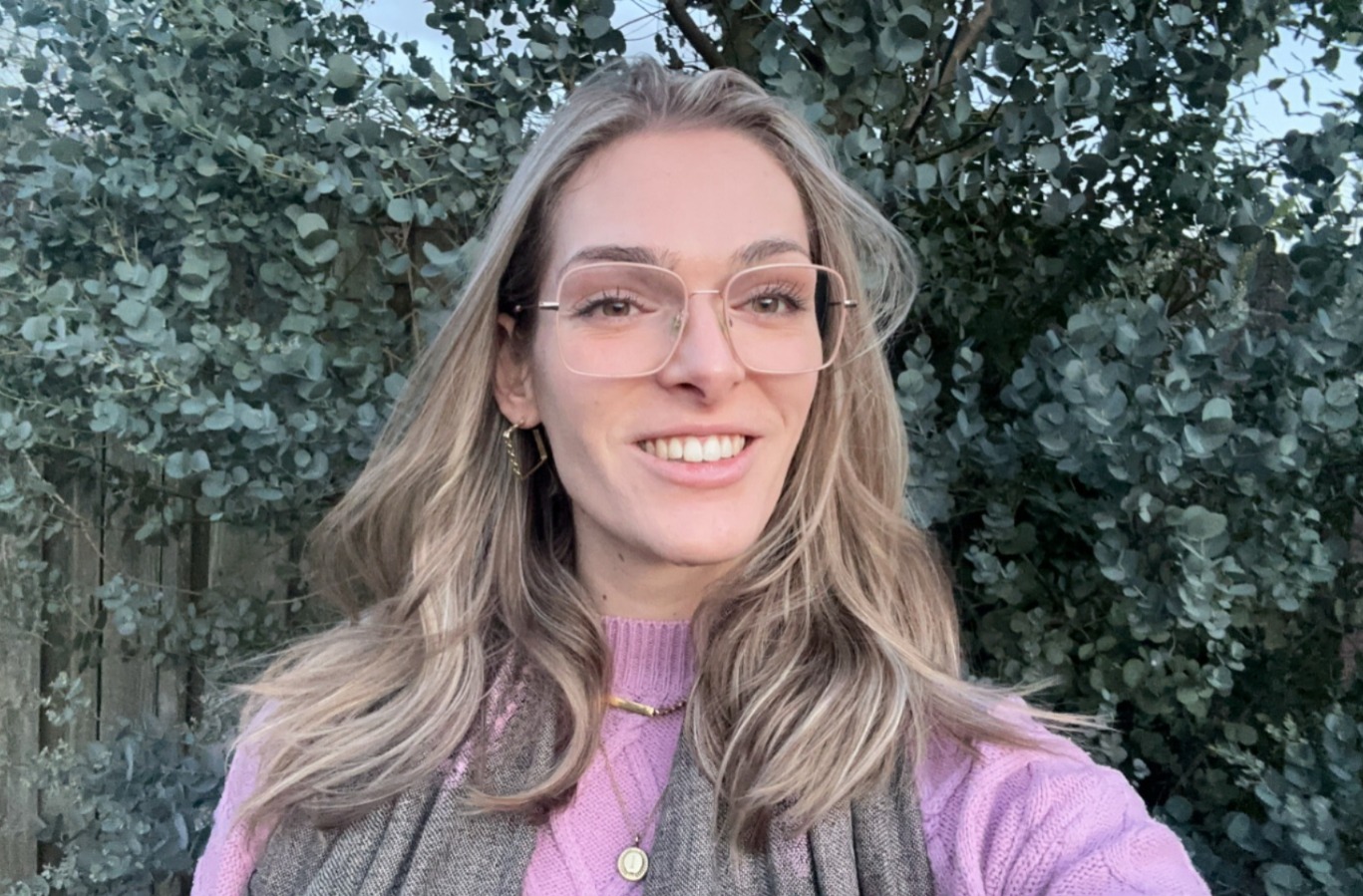
In December 2025, Imke van der Velden completed her Master’s degree in Health Food Innovation Management. Thanks to a Regio Noord-Limburg Scholarship, she was able to pursue this degree following her Bachelor’s studies at University College Venlo. However, her time as a student was not without its challenges. In the summer of 2020, Imke sustained a brain injury in two accidents that occurred in quick succession. Nevertheless, she refused to let these setbacks hold her back. With determination and her head held high, Imke continued to work towards her recovery and education, albeit at her own pace. Last year, we spoke to Imke while she was still studying for her Master’s degree. She has since graduated and is now pursuing a PhD at VieCuri Medical Centre in Venlo. How is this alumna doing now, and how has she experienced the past few years?
During her Master’s degree, Imke completed an internship at VieCuri Medical Centre in Venlo. It proved to be such an inspiring environment that she was reluctant to leave. She has since begun a PhD project there, researching how to support cancer patients in adopting a healthy lifestyle so that they can remain as healthy as possible before, during and after their treatment. Cancer patients can experience long-term fatigue and other complications. Imke finds it fascinating to explore how patients can be supported in ways that take account of their health literacy, needs and capabilities, and how this can contribute to their quality of life. “I am particularly drawn to the broad perspective on lifestyle: from nutrition, physical activity and sleep to the influence of mental health, family and friends, and the environment in which someone lives.”
Although Imke is doing well now, her road to recovery took longer than she had initially anticipated. She had planned to start her Master’s degree in September 2020, but the brain injury she sustained that summer meant that studying was not an option at the time. She tried to get started, but soon realised that she needed to listen to her body and put her recovery first. Noise and other sensory stimuli were difficult to tolerate. To ensure she got enough rest, Imke spent much of her time in bed, in a darkened room. It was not until after the summer of 2023 that she felt sufficiently recovered to resume her studies.
Her positive outlook and the support of her family, friends and dog helped her find the courage to take that step. Even so, she felt apprehensive about returning to her studies after such a long break. “I was really looking forward to getting back to my studies, but at the same time, I wondered whether I would still be able to manage. Looking back, I can say that things went better than I had expected. It was lovely to stay in touch with people at the university. Everyone was very understanding of my situation, and I felt able to be honest about how I was feeling, especially when things became too much for me.”
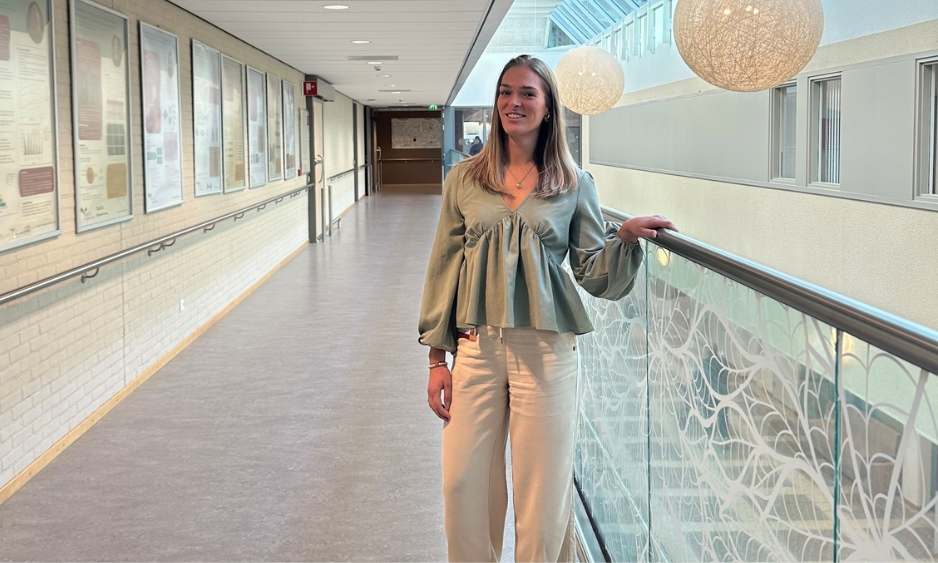
Imke van der Velden at VieCuri Medical Centre in Venlo.
“I am particularly drawn to the broad perspective on lifestyle: from nutrition, physical activity and sleep to the influence of mental health, family and friends, and the environment in which someone lives.”
To ease herself back into her Master’s degree gradually, Imke initially followed half of the programme. Sitting behind her laptop for a full day was still beyond her capabilities. “The headaches made looking at a screen a real challenge. The sheer amount of sensory stimulation also made it unbearable. I therefore had to build up my screen time gradually, from five minutes to ten, and then to fifteen.”
Once she realised that she could manage the reduced workload, she decided to rejoin her fellow students and take on the full programme. The practical visits that formed part of the Master’s degree could still be challenging at times. These activities gave students the opportunity to discover what things are like in practice. As such visits could be very demanding and drain a lot of her energy, Imke was advised to sit them out.
Nevertheless, she was keen to take part. “For the Food Fairs, for example, we had to spend a day in Frankfurt or Cologne. Those days were quite intense for me, and afterwards I needed to make sure I gave my body enough time to rest.”
By gradually exploring her limits and challenging herself, Imke learnt to assess more accurately what she was capable of and where she needed more time to recharge. She is now happy with her recovery and the progress she has made. Although she still experiences headaches on a daily basis and can sometimes become overwhelmed by sensory stimuli, she has learnt to manage these symptoms better. She has noticed this progress in her everyday life, too. Alongside her work, she can once again make plans to enjoy herself in her free time, such as meeting up with friends. However, it remains important for her to manage her energy levels carefully.
The recovery process has permanently changed Imke’s perspective on health. “I have learnt that our health can be very fragile. Before my accidents, I took my health for granted. Now, I see things very differently. I am incredibly grateful that I have been able to get back to doing so many things. My recovery has also shown me just how resilient we can be.”
Her experience has also taught her how important it is not to be too hard on yourself during the recovery process. Her advice to others recovering from a brain injury is not to compare themselves with the person they were before their injury. “It can be difficult to see the progress you are making if you do that. Try to let go of those comparisons and focus on every step you take, no matter how small.”
For Imke, progress sometimes came in the form of very small achievements, such as unloading the dishwasher. “For a long time, I was unable to do this household chore, or even be in the same room when my housemates were doing it.” This was largely due to the clattering of plates and cutlery. Imke is therefore proud of all the steps she has taken and how far she has come. “You can still achieve a great deal, even if it might not feel that way at the time. Stay positive and believe in yourself, because you can often do more than you think!”, Imke concludes with a smile.
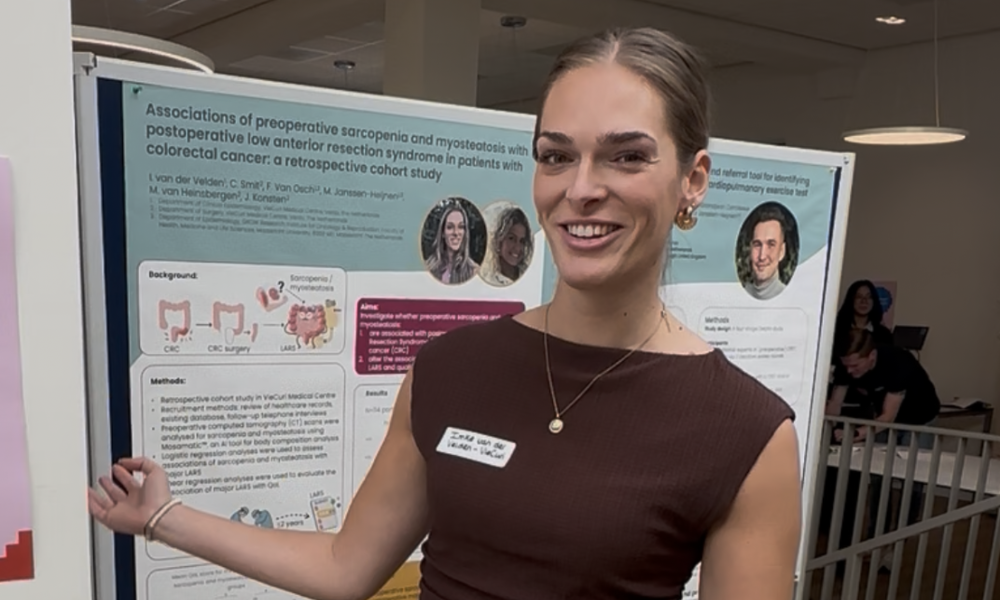
Imke van der Velden at Maastricht University’s Venlo Campus during the Weekend of Science.