

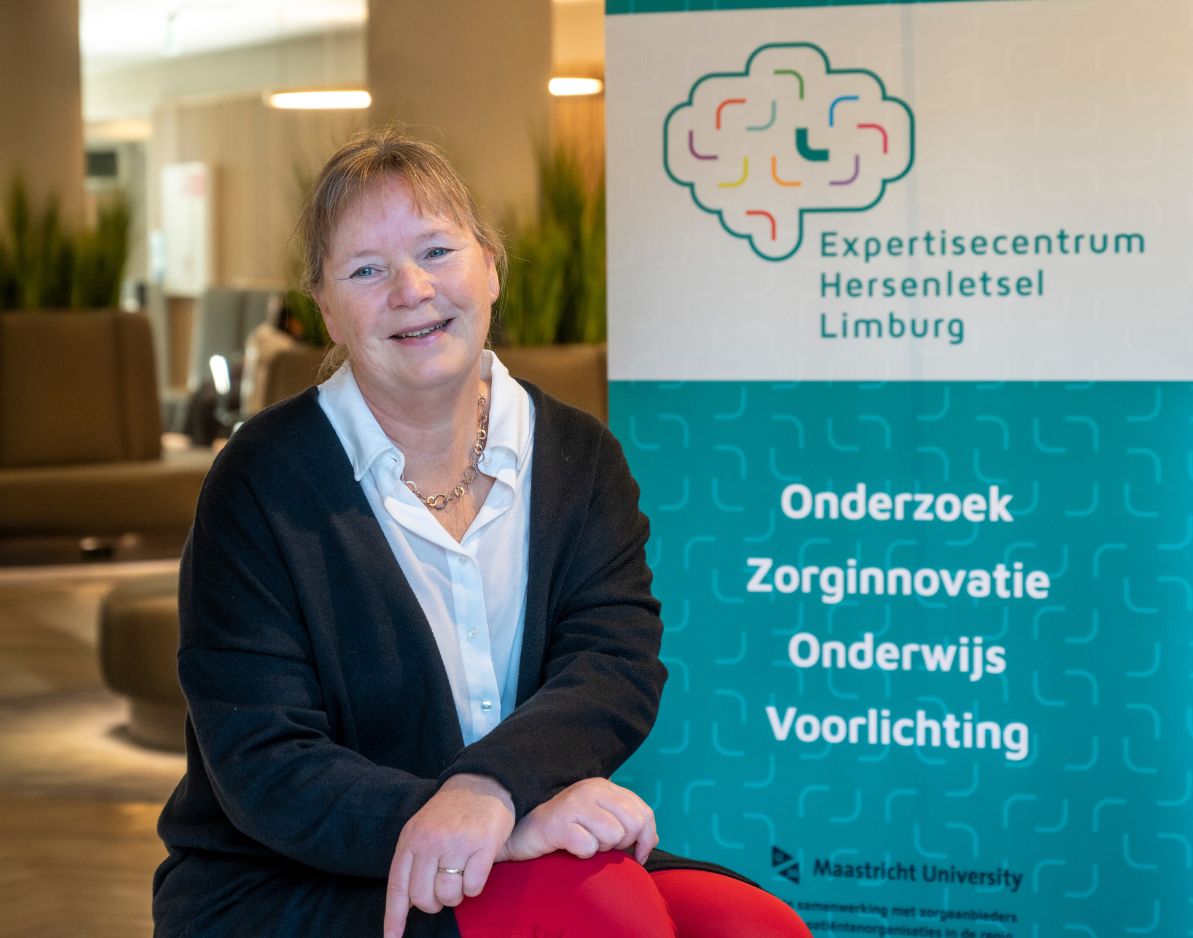
We carry out many activities in our daily lives on autopilot. Going to the supermarket, doing the laundry and emptying the dishwasher: these are all part of our routine, and we often give them little thought. Yet everyday life is more complex than we realise. This becomes particularly apparent for people recovering from brain injury. What makes it so difficult to get back into the swing of things? And how can they gradually resume their daily activities, step by step? Caroline van Heugten, Professor of Neuropsychology at Maastricht University and founder of the Brain Injury Fund within the University Fund Limburg, discusses the challenges faced by people with brain injury. Together with her team, she is developing the Cognitive Exercise Guide, a practical tool designed to help them gradually rebuild their ability to carry out these everyday activities.
Brain injury can be congenital, develop gradually as a result of declining brain function, or occur suddenly, for example following a stroke, an accident or a cardiac arrest. The consequences and the medical care required vary considerably, ranging from a brief visit to the emergency department to a prolonged stay in intensive care.
Regardless of the severity of the situation, van Heugten believes that all these cases involve ‘a break in the continuity of life’. “Yesterday, you were functioning normally, and today you find yourself in hospital with a brain injury. You may have neurological deficits or have been resuscitated. Your body has taken quite a blow. That is no small thing.”
Initially, the shock of receiving such a serious diagnosis often takes centre stage. This is followed by a sense of relief when the person is medically stable and allowed to return home. During the first few days or weeks at home, recovery often seems relatively straightforward. Family members and loved ones are protective and caring, and there is plenty of time to rest. The next phase, when someone tries to resume their everyday life, often proves more challenging than expected. It is precisely at this point that the consequences of the brain injury become apparent. This has everything to do with the complexity of everyday activities. “As long as your brain is functioning normally, you have no idea how much is involved in carrying out such ordinary tasks.”
But what exactly makes everyday life so complex? According to van Heugten, three factors play an important role: planning and organising, the amount of sensory stimuli we are exposed to, and the pace at which everything happens. “Many everyday activities require planning and organisation. This places a considerable demand on the brain. In addition, we are constantly having to process all kinds of sensory stimuli, such as sound and light. The pace of everyday life can also be challenging, particularly when the brain may be processing information more slowly following an injury.”
A trip to the supermarket brings all these challenges together: you have to plan meals, find the items you need, process sensory stimuli and constantly switch between tasks. “It may start with something as simple as trying to find a parking space on a busy day.
Then you may find that items on your shopping list are out of stock or have been moved, or that someone in a hurry bumps into you with their shopping trolley. For someone with a brain injury, this can be overwhelming. There is too much going on, everything moves too quickly and too much organisation is required. As a result, an ordinary trip to the supermarket can become exhausting.”
People respond to these challenges in different ways. “Some become angry or frustrated when an activity does not go as planned. Others withdraw or decide to give up for the time being, perhaps because they develop a headache or become overwhelmed by sensory stimuli. In such cases, partners often take over certain tasks.”
Although loved ones may take over activities with the best of intentions, this can unintentionally hinder recovery in the long term. “To some extent, the brain is capable of recovering. This recovery is generally fastest during the first few months after the injury. It is important to gradually resume activities and keep using the brain. Avoiding everything does not help with that.”
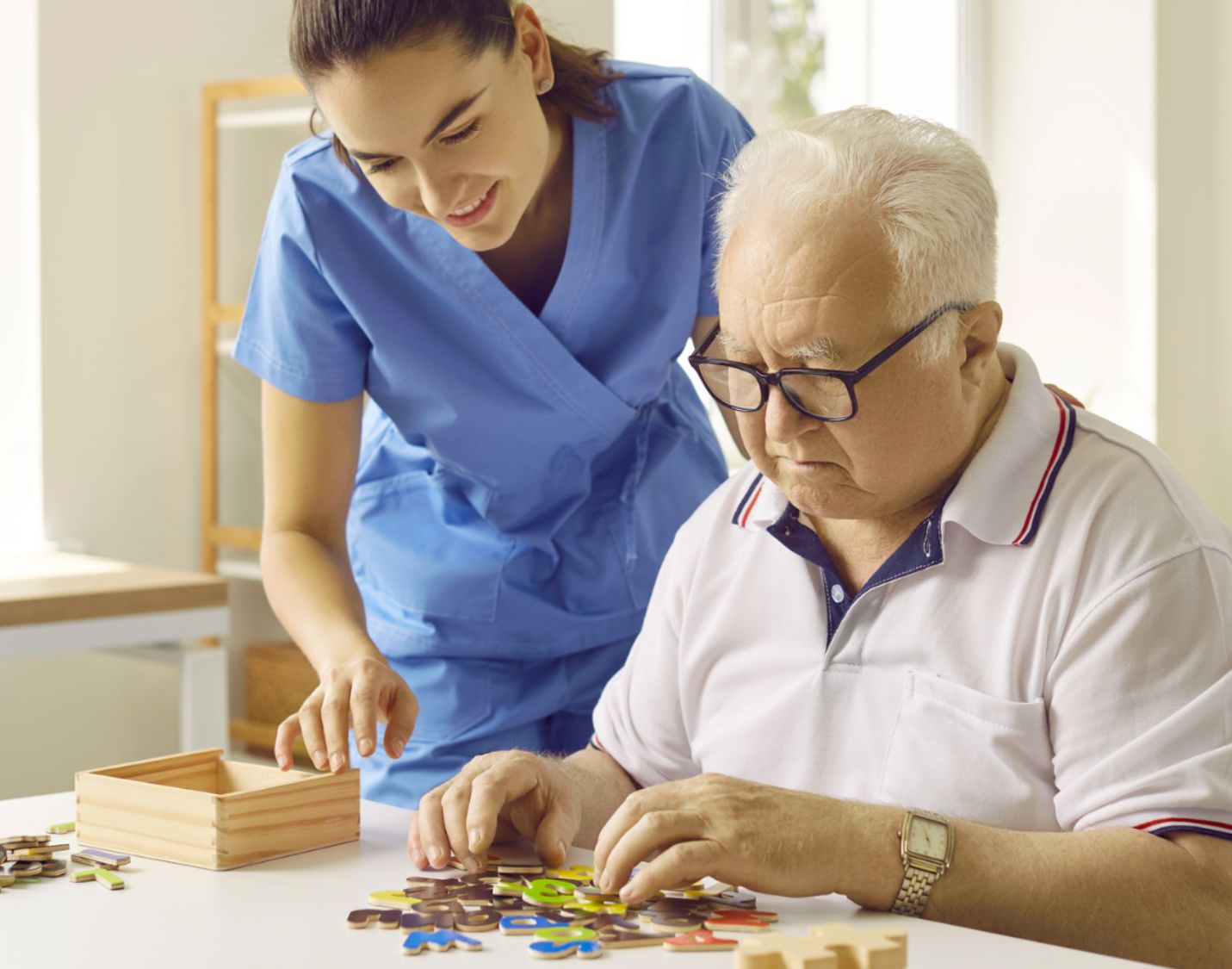
How can people gradually rebuild their ability to carry out everyday activities without overexerting themselves? To support them in this process, van Heugten and her team are developing the Cognitive Exercise Guide. The guide contains practical exercises that break down everyday activities into small, manageable steps. These steps can then be gradually extended, with the aim of enabling people to carry out activities as independently as possible once again. The approach combines insights from neuropsychology and occupational therapy.
“The idea for the Cognitive Exercise Guide came from the realisation that many people do not understand what makes an everyday activity so complex, or how to break it down into smaller steps. With this guide, we want to show people where to start and how they can gradually build up their activities.” The guide begins with information about the changes that can make everyday life so challenging after a brain injury. This is followed by exercises at three different levels of difficulty. These range from activities such as doing the weekly shop and driving at the highest level, to operating the washing machine or dishwasher at a lower level.
For someone wishing to practise doing their weekly shop, for example, the first step might be to visit a familiar supermarket at a quiet time of day. The shopping list should contain no more than five simple items. It is also advisable to take someone close to them along in the beginning. If this goes well, they can try doubling the number of items or visiting at a slightly busier time. “It is a matter of finding out what is possible at each stage. The first steps may still seem a long way from what people ultimately want to be able to do again, but every step brings them closer to that goal.”
Although the Cognitive Exercise Guide is still under development, there is already considerable interest in it. “We have been in contact with therapists across the country, and it quickly became clear that there is a need for a practical tool to help people with brain injuries resume their everyday activities.”
To make the development of the guide possible, van Heugten launched a crowdfunding campaign through the University Fund Limburg. “The campaign is going really well, and I have already raised a substantial amount. The hospital thought the initiative was a great idea and appreciated the collaboration with the occupational therapy department. As a result, they donated half of the total amount. I am incredibly grateful for that!” Van Heugten also took on a sporting challenge to support the campaign. She got on her bike and cycled from Rotterdam to Maastricht, following the River Meuse. This special cycling challenge helped her raise a fantastic amount of money.
“The campaign is going really well, and I have already raised a substantial amount. The hospital thought the initiative was a great idea and appreciated the collaboration with the occupational therapy department. As a result, they donated half of the total amount. I am incredibly grateful for that!”
Thanks to the campaign, the team has now been able to begin developing the guide. The researchers are starting by working out the most straightforward exercises in collaboration with people with brain injuries and other healthcare professionals. Once the guide is complete, it will be tested by the target group.
The guide will combine text and images and is likely to be published in print initially. Developing an app is also a possibility for the future. In addition, the researchers want to evaluate the benefits of the guide for patients and their loved ones, looking at factors such as everyday functioning, satisfaction and the perceived burden of care.

The start of Caroline van Heugten’s cycling challenge
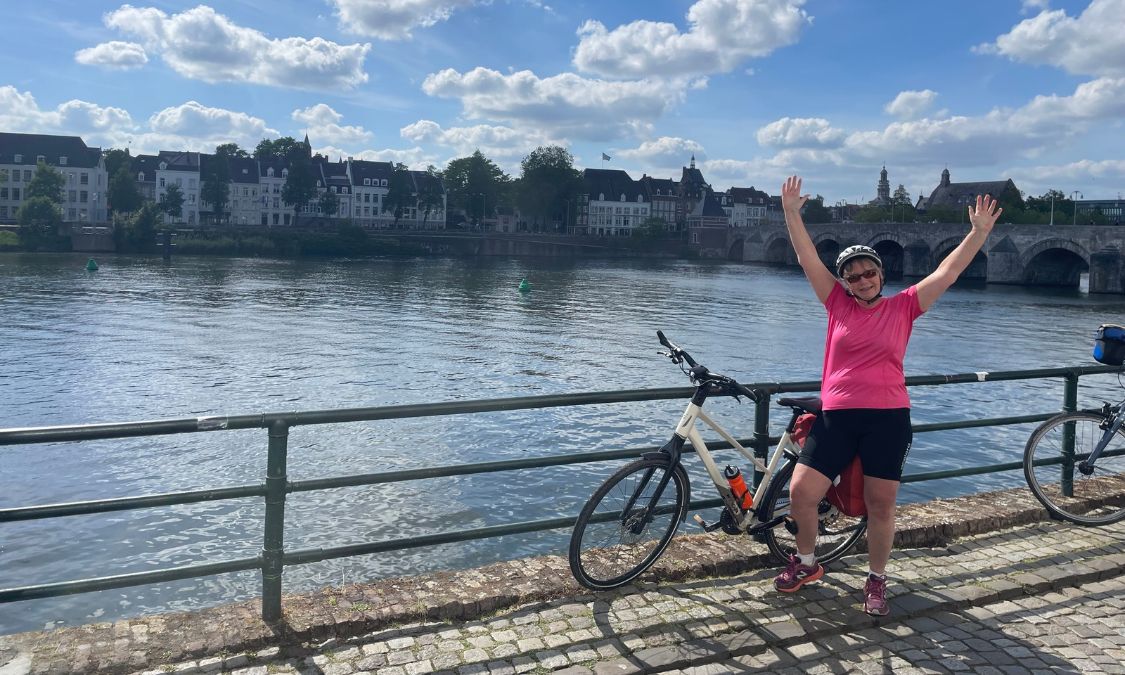
The finish of Caroline van Heugten’s cycling challenge
Recovery after a brain injury is different for everyone. The severity of the injury plays a part, but so does the way a person copes with it. “If someone becomes anxious and, as a result, overly cautious, it can be difficult to get back into the swing of things. But being too eager and not giving the body enough time and space to recover is not helpful either.”
This is precisely why an individual approach is so important. With the Cognitive Exercise Guide, van Heugten hopes to help people gradually resume their everyday activities in a way that suits their individual needs. “People with brain injuries often tell me that their lives have become less spontaneous. They have to plan everything and find it difficult when things do not go as expected. With the exercise guide, we want to help them gradually regain the automatic routines they used to take for granted.”
Her advice? “Try to get back into the swing of things at your own pace, and seek out all the support you can.”