

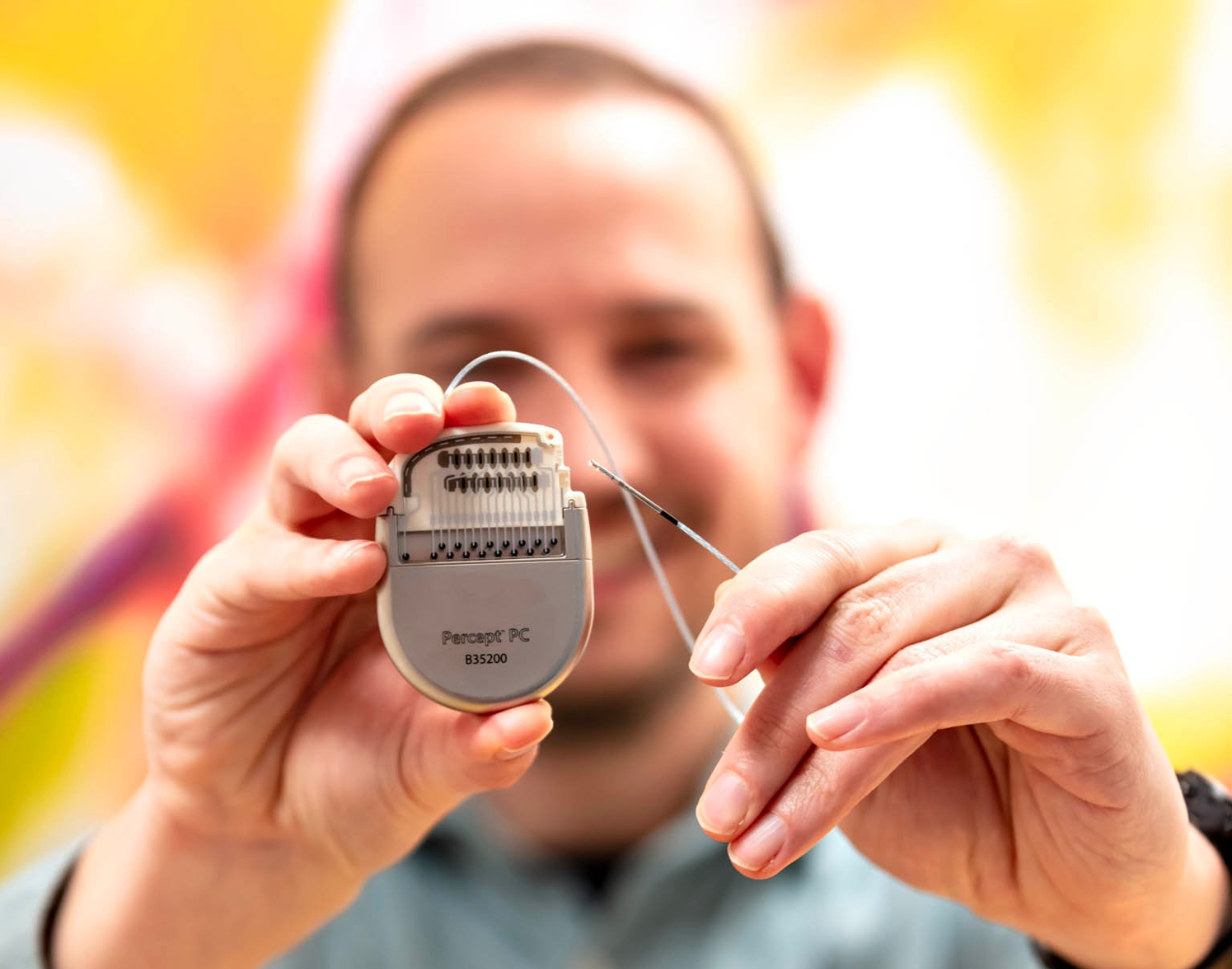
Hearing a constant ringing, buzzing or hissing sound, with no way to switch it off. For people living with tinnitus, this is a daily reality. It can have a profound impact on their lives: sleeping, concentrating and relaxing can become enormous challenges, particularly when symptoms are severe. For most patients, existing treatments offer little relief. But what actually happens in the brain when someone has tinnitus? And can we influence this disrupted brain activity? Researchers at Maastricht University (UM) are investigating whether deep brain stimulation could offer a new treatment option, bringing these people the relief they so desperately hope for.
Tinnitus, also known as ringing in the ears, is the perception of sound without an external sound source. The causes of tinnitus and the precise mechanisms behind it are not yet fully understood. However, there is evidence that tinnitus is associated with increased brain activity in the network involved in hearing. It is as if the brain continues to generate sound, even when no sound is coming in from the outside world. To gain a better understanding of tinnitus, it is therefore important to look beyond the ears and focus on the brain regions that work together to process sound.
Deep brain stimulation (DBS) is not a new technique. It is already used to treat several neurological conditions, including Parkinson’s disease. In Parkinson’s, abnormal brain activity occurs in the network involved in controlling movement. Electrical stimulation allows researchers and doctors to influence this activity.
Mark Janssen, neurologist and clinical neurophysiologist at MUMC+ and researcher at Maastricht University’s Mental Health and Neuroscience Research Institute (MHeNs), explains how this idea led to the tinnitus research: “Deep brain stimulation has been used for some time to treat conditions such as Parkinson’s disease. In those cases, we target the abnormal brain activity involved in movement. This led us to ask: could we use the same technique to influence the abnormal activity in the auditory network?”
This idea led to a collaboration between neurologists, ENT specialists, audiologists, neurosurgeons and researchers at Maastricht University. Together, they are investigating how DBS could be used to treat patients with severe tinnitus.
“Deep brain stimulation has been used for some time to treat conditions such as Parkinson’s disease. In those cases, we target the abnormal brain activity involved in movement. This led us to ask: could we use the same technique to influence the abnormal activity in the auditory network?“
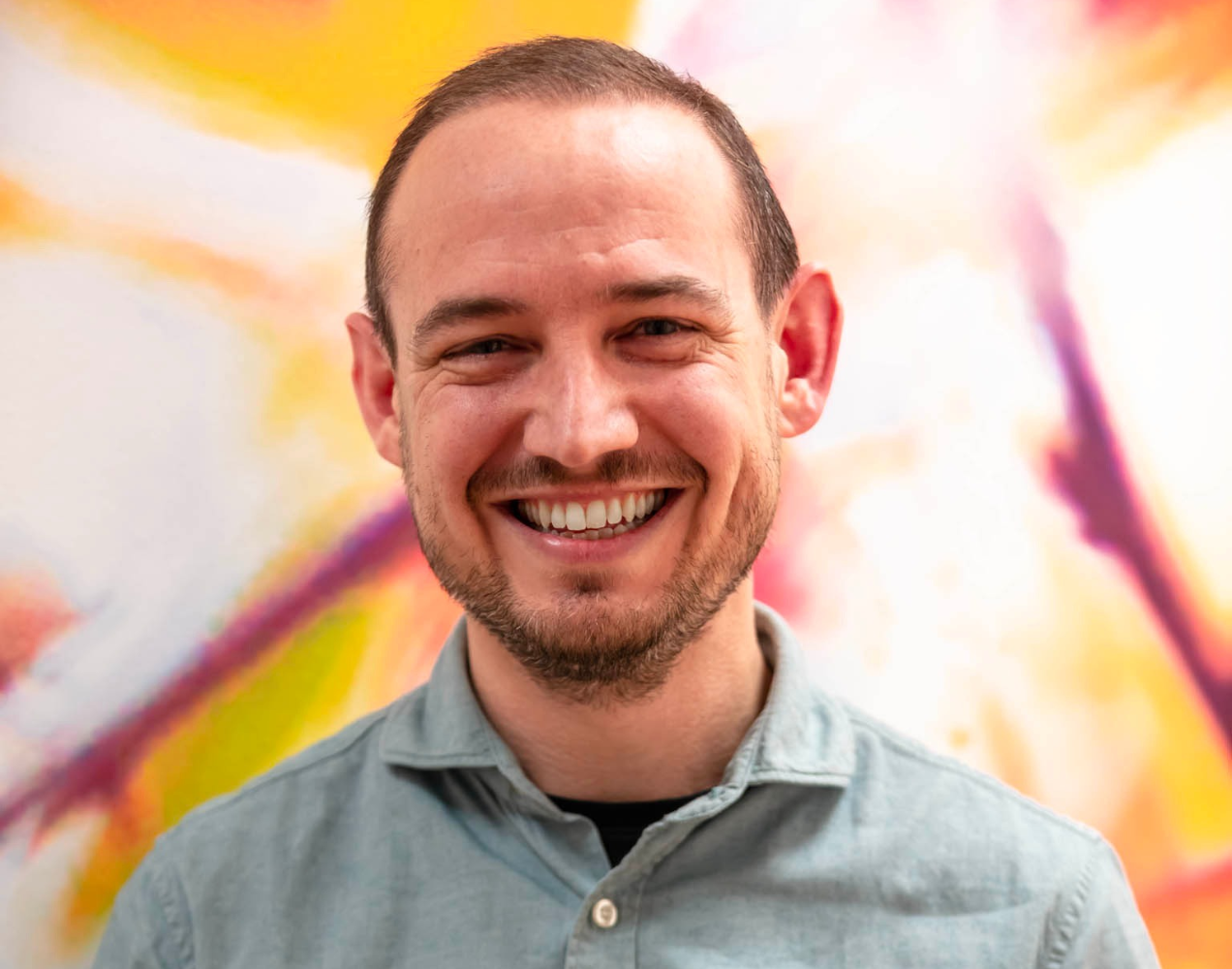
One remarkable feature of DBS is that the electrodes implanted deep inside the brain do more than deliver electrical pulses: they can also record brain signals. The researchers are making use of this unique capability by combining measurements taken deep inside the brain with recordings from the brain’s surface. This allows them to gain a better understanding of how different brain regions involved in hearing and tinnitus communicate with one another.
Mark Janssen explains: “What makes this technique so remarkable is that we can not only influence brain activity, but also measure it. This gives us a unique insight into the brain and helps us better understand how different brain regions communicate with one another. This knowledge allows us to make the treatment increasingly targeted.”
This is important because tinnitus is unlikely to originate in just one part of the brain. Instead, it appears to be associated with brain activity across a wider network. By gaining a better understanding of how these regions work together, researchers can investigate where and how brain activity becomes disrupted in tinnitus. The ultimate aim is to use targeted DBS to influence and potentially restore this disrupted activity.
DBS has now been used in an initial study involving four people with very severe tinnitus. Fine electrodes were implanted in a specific target area deep inside the brain. These electrodes delivered electrical signals to influence the overactivity in the auditory network. The treatment was found to be safe and well tolerated, with no lasting side effects. Three of the four participants also experienced a significant reduction in their tinnitus symptoms. These initial findings offer hope for a new treatment option for people whose symptoms do not respond sufficiently to conventional treatments and whose tinnitus is not caused by any identifiable underlying condition.
“What makes this technique so remarkable is that we can not only influence brain activity, but also measure it.“
Mark Janssen is optimistic about these early results: “The initial findings are encouraging. Of course, we need to be cautious: four patients is a small group, and further research is needed. But the fact that three out of the four participants experienced a clear reduction in their tinnitus symptoms certainly motivates us to continue this work. Ultimately, we hope to develop a new treatment option for people who currently have very few options.”
Over the coming years, further research will focus on the effectiveness and safety of this treatment, to establish whether DBS can genuinely provide relief for people with severe tinnitus. If the results are positive, the researchers hope that DBS will become more widely available in the future and eventually be introduced into clinical practice as a new treatment option for people with severe tinnitus.
In this way, the researchers hope to take an important step towards a future with more treatment options for people living with severe tinnitus.
To turn these ambitions into reality, additional funding is needed. Philanthropic donations play a vital role, giving researchers the freedom to explore and test new ideas. To support this work, a crowdfunding campaign has been launched through the University Fund Limburg, in collaboration with Michael van Seumeren, an event organiser and former DJ who also lives with tinnitus.
Would you like to help create a future with more silence for people living with severe tinnitus? Support the research through our crowdfunding campaign.