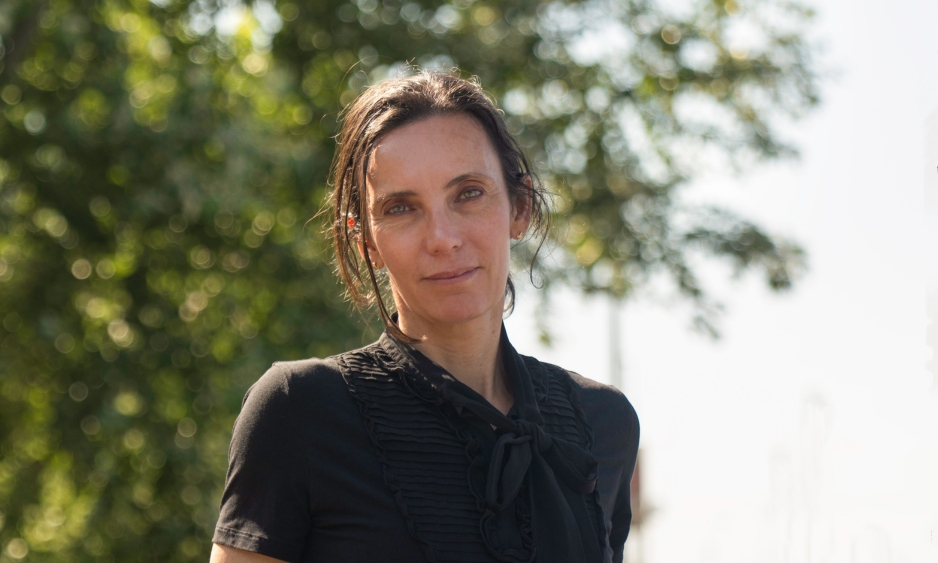
‘A problem shared is a problem halved.’ According to old-age psychiatrist and researcher Dr Sjacko Sobczak, this proverb holds an important key to mental resilience. “We are social beings and we need one another.” As part of the Neuropsychiatry Care Programme at Mondriaan’s Department for Older People, she primarily treats people with neuropsychiatric care needs. Drawing on her work, she shares her views on the factors that contribute to mental resilience, as well as the obstacles that can make older people vulnerable.
Neuropsychiatry focuses on the assessment and treatment of psychological and behavioural symptoms associated with disorders or changes in the brain. Older people in particular may experience cognitive difficulties and the physical, psychological and psychosocial problems that can accompany them, although younger people can also be affected. “It is often a matter of piecing together where these symptoms come from,” explains Dr Sobczak.
That is why she looks not only at a person’s symptoms, but also at their life story. Questions she considers include: How has this person managed to cope with life in the past? Was there someone close to them who played an important role in this? And how can we help restore that sense of stability at this stage of their life? By taking this broad perspective, she seeks to identify new starting points for strengthening mental resilience in people experiencing cognitive difficulties.
Mental resilience is the ability to cope with adversity, uncertainty and change in a resilient way. According to Dr Sobczak, it is not so much about what happens to us, but how we deal with it. Various factors determine how mentally resilient a person is and how they respond to change. The most important protective factor is social connectedness. “Sharing your feelings with your partner or a close friend can help you co-regulate your emotions. It creates a support system, meaning you do not have to carry everything on your own. That is why we say: ‘A problem shared is a problem halved.’” Having a sense of purpose in life and the ability to put events into perspective also contribute to resilience, she says.
In older people, these protective factors are often under pressure, which can make it difficult to maintain mental resilience. “Social support can disappear as people around them pass away. Older people may also no longer have a sense of purpose in life because they have stopped working or are no longer caring for a loved one. In addition, their physical health may deteriorate, making them less mobile. If they no longer drive a car or live further away from family, maintaining social contacts can become more difficult. On top of that, cognitive functions such as memory may decline in later life, and understanding new situations can require more effort,” explains Dr Sobczak.
It is precisely this accumulation of changes that can make it challenging for older people to respond resiliently to major life events, such as loss or serious illness. “It is not without reason that the writer Adriaan van Dis once said: ‘Growing old is not for the faint-hearted.’ After all, some of life’s greatest challenges often come when we are older. Reaching the age of 100 is a wonderful thing, but the likelihood of, for example, outliving your children becomes increasingly greater.”
Because psychological problems in people with dementia can often be difficult to recognise, Dr Sobczak not only works as an old-age psychiatrist but also conducts research into this area. She is the founder of the Age@Minds Fund, a Named Fund within the University Fund Limburg. One example of these psychological problems is post-traumatic stress disorder (PTSD), a condition that many people primarily associate with veterans. We now know that people who have experienced traumatic events in other ways can also develop PTSD.
Since the fund was established in 2021, significant progress has already been made. By focusing on people with dementia and psychological problems, Dr Sobczak and her research team have shown that this group can also benefit from psychological treatments. One example is Eye Movement Desensitisation and Reprocessing (EMDR), a treatment method that helps people process traumatic memories in a less distressing way. “The initial results in people with dementia are very promising.” By making existing psychological care accessible to people with dementia, they are supported in improving both their mental resilience and their quality of life.
One development within the fund that Dr Sobczak is particularly proud of is the creation of the TRADE interview. This diagnostic interview makes it possible to identify PTSD in people with dementia through conversations with the individual themselves, a close relative and a healthcare professional. “We are currently analysing the initial results. Even so, there is already considerable interest from healthcare professionals who want to use the TRADE interview in practice, including internationally. I think we have achieved a great deal in a short space of time.”
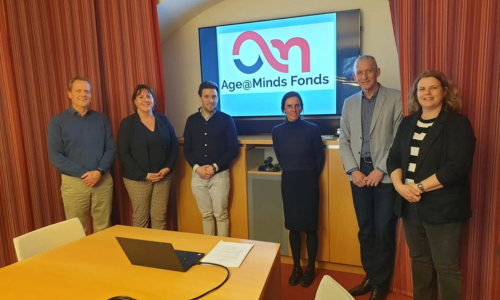
The establishment of the Age@Minds Fund
Worldwide, considerable attention has been devoted to the treatment of mental health problems, but according to Dr Sobczak, prevention is still too often overlooked. She sees acknowledging traumatic experiences and talking about them as an important step towards strengthening mental resilience. Yet this does not always happen, partly because of feelings of shame and guilt. “In people with dementia and mental health problems, it can often be difficult to determine where these problems stem from. Their children often do not know either. Many of these older people belong to the post-war generation: work hard, do not complain and carry on. Compared with the war, everything else seemed insignificant. As a result, trauma was often pushed aside for many years.”
Dr Sobczak therefore hopes that, in the future, we will be more open about what we have experienced. In her view, this starts with asking the right questions, so that it becomes clear what someone needs at the moment when they are most vulnerable. “We all need to recognise that the feelings associated with trauma are allowed to be there. We should be less afraid of them. I hope that we can find a place for trauma in our lives, in connection with others.”
As our population ages, it is becoming increasingly important to focus on and invest in mental health and resilience in later life. According to Dr Sobczak, this requires a broad perspective on trauma that takes a person’s entire life course into account. Traumatic experiences in early childhood can resurface later in life and continue to affect a person’s mental health. “We really need to move away from the idea that, just because something happened a long time ago, it no longer has anything to do with the present.”
She also advocates for a stronger network of experts by experience within mental health services, as their value is still not sufficiently recognised. Dr Sobczak believes there is ultimately an even more effective way to invest in a resilient society. “If you really want to make an impact, you need to invest in younger generations. If you support people from the outset in dealing with adversity and change, you are investing in the mental resilience of society as a whole in the best possible way.”