

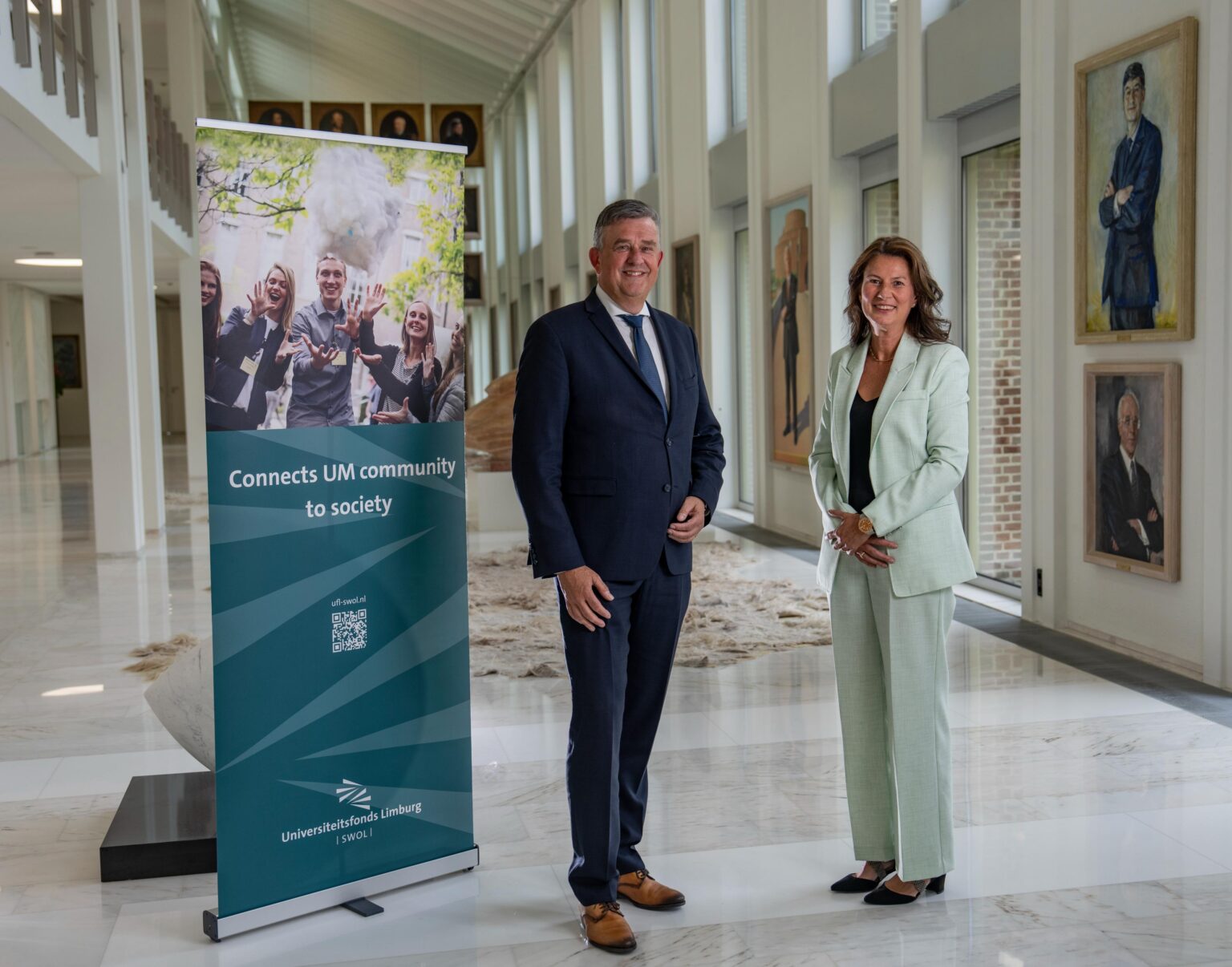
The University Fund Limburg (UFL) was founded on 8 November 1965, originally under the name Stichting Wetenschappelijk Onderwijs Limburg. It originated from a mix of regional ambition, social disadvantage and political strategy, with the aim of stimulating academic education in the Province of Limburg. Now, 60 years later, the Fund looks back on a rich history—and forward with strong ambition.
In the mid-1960s, the impending closure of the Limburg mines highlighted the economic and social vulnerability of the region. At the same time, there was a shortage of highly educated workers, while the government strived to ensure knowledge institutions were more evenly distributed across regions. The Rijksuniversiteit Limburg was founded in 1976, backed by the business community and broad citizen support—300,000 signatures in favour of a medical faculty. UFL was a driving force behind this institution, which would later grow into Maastricht University (UM).
“The university would not be here today without the strength of the region ,” says UFL director Bouwien Janssen. “Businesses were in search of highly educated professionals , and society believed in this leap forward.” That spirit of social engagement still defines UFL’s work today.
Even in 2025, the original goal is still very much alive. “The world is changing rapidly,” says Emile Roemer, chair of UFL and governor of Limburg. “Whether it’s healthcare, sustainability or digitisation, the challenges are only growing, and with them the need for high-quality research.”
According to Roemer, UFL’s strength lies in supporting research that not only matters to Limburg but also makes an impact far beyond. “Consider the drive towards sustainability in the chemical sector and the pursuit of equal opportunities in education — both key issues that benefit from strong public backing. . By responding to urgent local needs while aiming for a supra-regional impact, we put Limburg on the map.”

The medical faculty was officially opened on 16 September 1974, with the first 50 students and staff welcomed at City Hall and the provincial government offices—a landmark moment. “There’s always been a strong bond with the Province, and that continues today,” says Janssen. Legally, the university did not yet exist: it was officially founded by Queen Juliana on 9 January 1976.
Roemer highlights the international character of the region as a strength for the university. “We’re in a unique border region, but we don’t think in terms of borders. Our strength lies in working across them.”
“There’s always been a strong bond with the Province, and that continues today.”
From the start, UFL has been committed to supporting education and research in the region—a mission that has never changed. “We see ourselves as a connector, the bridge between UM and society. Knowledge is created inside the university, but it shouldn’t stay within these walls. Through the Fund, we make research possible, visible and accessible,” Janssen says.
Improving the world is paramount for UFL—and public support is indispensable, since not all projects receive government funding. Thanks to its broad network of regional companies and stakeholders, UFL can finance a wide range of research projects and scholarships.One notable example is the annual UM Dinner, organised in partnership with the Province of Limburg since 2009..
“This dinner has a unique format. It’s attended by well-known Limburg companies that select a theme that matters to them. During the dinner they’re paired with professors specialising in that area. This often leads to new insights, and even surprising new regional partnerships,” Roemer explains.
In 2026, UM will celebrate its 50th anniversary. Its alumni community is growing, both in number and age. “Alumni are a key audience for the Fund. Many hold influential positions in the business community and tend to have a strong connection with their alma mater. It would be valuable to involve them more, through their knowledge, networks or support,” Janssen says.
Some alumni who have spent years working elsewhere in the Netherlands eventually return to Limburg. “They see opportunities here that appeal to them and find their way back,” Roemer says. “This shows that the region remains attractive for top talent.”
Together with other university funds, UFL has been working to raise awareness around legacies. “It’s a campaign that fits well with our ageing alumni base. People often don’t consider the option of including a university in their will. But it’s a wonderful way to make sure your ideals live on when you’re no longer here,” Janssen says.

With an impressive past behind it, UFL is firmly focused on the future. “Limburg has always adapted to major events, such as floods and economic setbacks,” Roemer says. “But we’ve shown resilience and keep on reinventing ourselves. The Fund plays an important part in that.”
“Sixty years ago,we joined forces to offer the region new prospects after the mines closed,” Janssen adds, “ I would very much welcome the opportunity to join forces again in the near future. Not out of necessity, but out of a commitment to urgent social issues such as healthy childhood development, equal opportunities and healthcare innovation. That’s how we’ll continue to build a resilient future together.”